ServicesSolar Panel Installation
Solar Panel Installation in Farmington
We design and install solar panels on shingle and metal roofs that sit neatly on your home and feed power straight into it. Every attachment is flashed and sealed, your yard and siding are protected while we work, and the site is cleaned every evening.
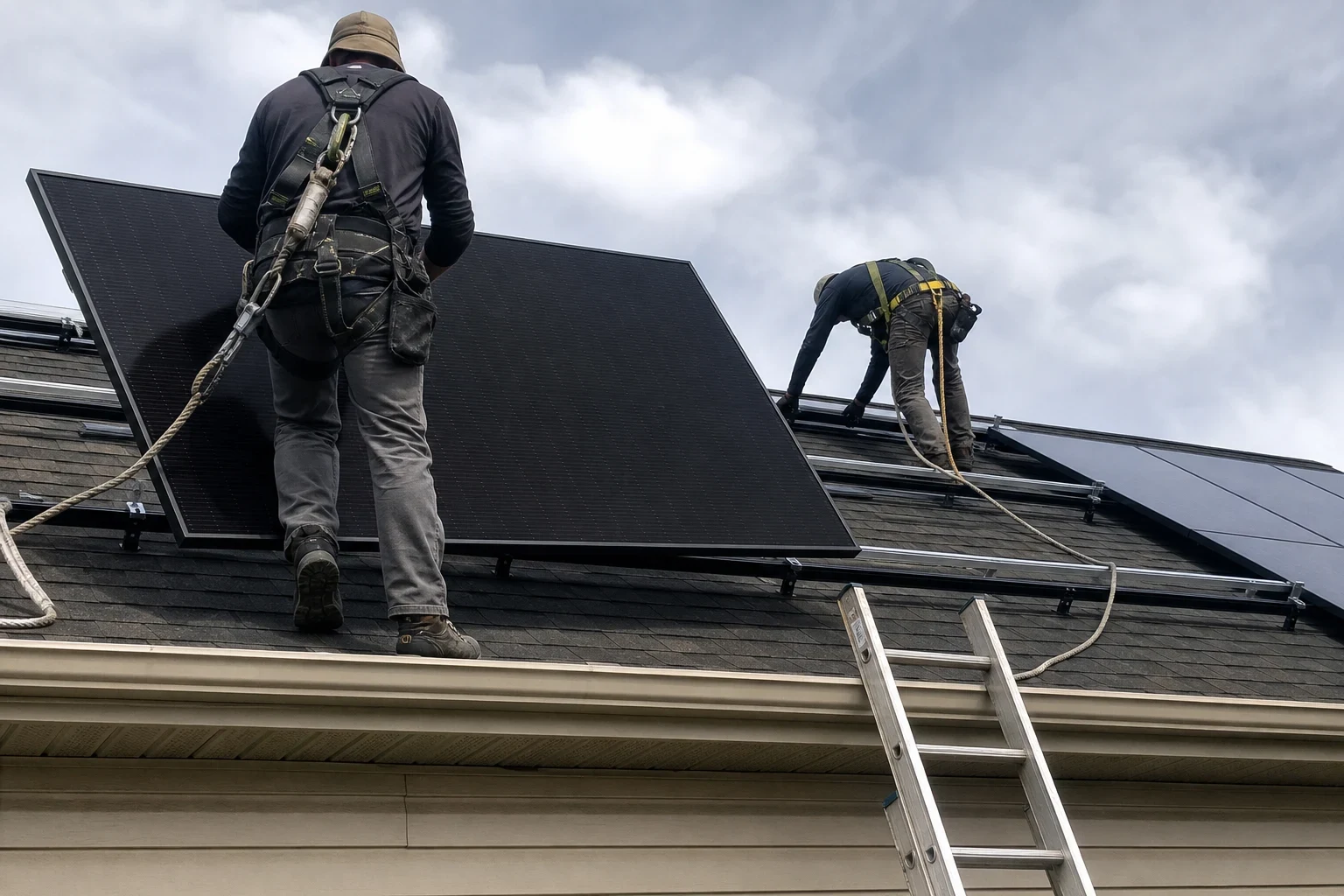
A solar array that fits the roof it sits on
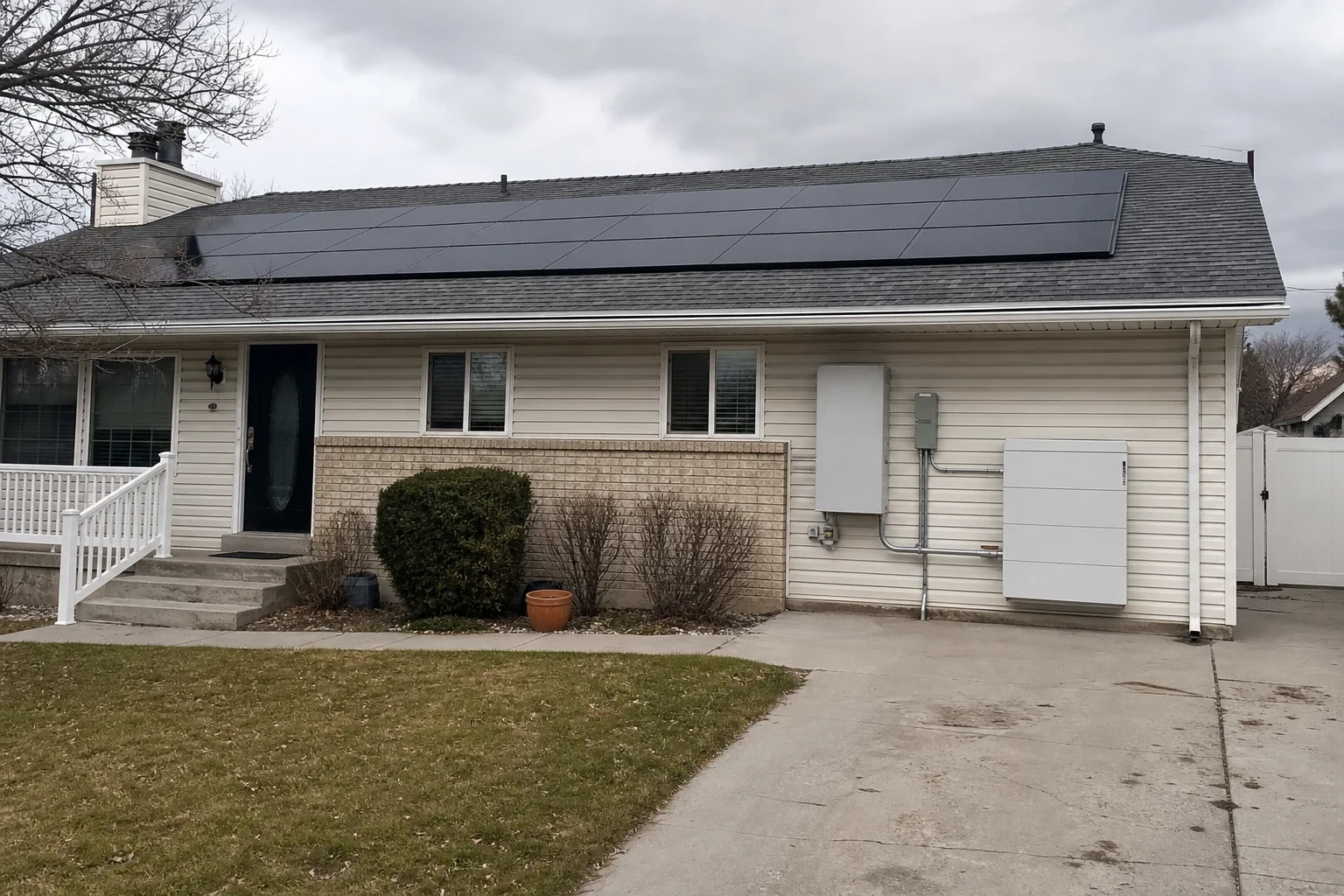
A rooftop system puts the panels on low aluminum rails fastened to your roof framing through flashed, sealed attachments. We lay the rows out to make the most of your sunniest roof planes and keep them clear of vents, chimneys and shade from nearby trees.
It is the right call when you want to cut your power bill and your roof has good sun exposure and plenty of life left in it. Most homeowners can start with $0 up front.
The part people remember afterward is how the house looked on the last day. We plan the rail layout, the conduit route down to the equipment wall and the inverter location together so the finished job reads as a deliberate part of your home.
What the installation includes
- Roof inspection and shade study
- We check the condition of your shingles or metal roofing, measure each roof plane and look at sun angles through the seasons. The panel layout comes from this, not from a guess on a satellite photo.
- System design and permits
- We size the system to your actual electricity use, draw the plans and handle the city building permit and the utility interconnection paperwork.
- Sealed attachments and racking
- Attachments are fastened into the roof framing and flashed and sealed against water. Aluminum rails are set straight and evenly spaced from the roof edges so the rows hold their alignment through snow and wind.
- Panels, inverter and wiring
- We mount the panels, run conduit neatly from the array down to the equipment wall and install the inverter and disconnects beside your electrical panel, labeled clearly.
- Cleanup and final roof check
- We pick up fasteners, wire ends and packaging from the roof, gutters and yard, then check every attachment and roof penetration one last time before we leave.
Signs rooftop solar is right for your home
Summer bills keep climbing
Long air conditioning months push usage up fast. A properly sized array offsets much of that daytime load.
Your roof gets steady sun
A south, east or west roof plane without heavy shade is often the best place on the property for solar.
Your roof has years of life left
Panels sit on the roof for decades, so a roof in good shape is the right starting point. We check it before anything is designed.
Your home is a long-term address
The return on solar builds year by year. When you expect to live in the house for many years, there is time for those savings to accumulate.
You are thinking about backup power
An array designed now can be paired with battery storage later without rebuilding the system.
What shapes the cost of your system
Every array is priced from your roof and your power use, so we put the numbers in writing after the site visit. Many homeowners start with $0 up front, and the proposal lists each part of the job on its own line so nothing is bundled out of sight.
System size
The panel count follows your yearly electricity use. A larger array costs more but covers more of the bill.
Conduit run to the equipment wall
The conduit from the array down to your inverter and electrical panel is a real line item. A shorter, straighter run keeps labor and material costs down.
Roof type and pitch
Shingle and metal roofs use different attachments, and a steep or complex roof can add time and safety setup.
Electrical panel condition
An older service panel sometimes has to be replaced before it can accept a solar connection. We check it early, while the design is still on paper, so a needed upgrade is written into the proposal instead of surfacing midway through the build.
Equipment choices
Panel efficiency, inverter type and whether you add battery storage or other solar system add-ons all move the final figure.
How the work runs, from first call to final walk-through
- 1
Free virtual appointment
We meet by video, look at your roof and recent power bills with you and talk through placement and savings. You leave with a clear picture before anyone sets foot on the property.
- 2
Site visit and written design
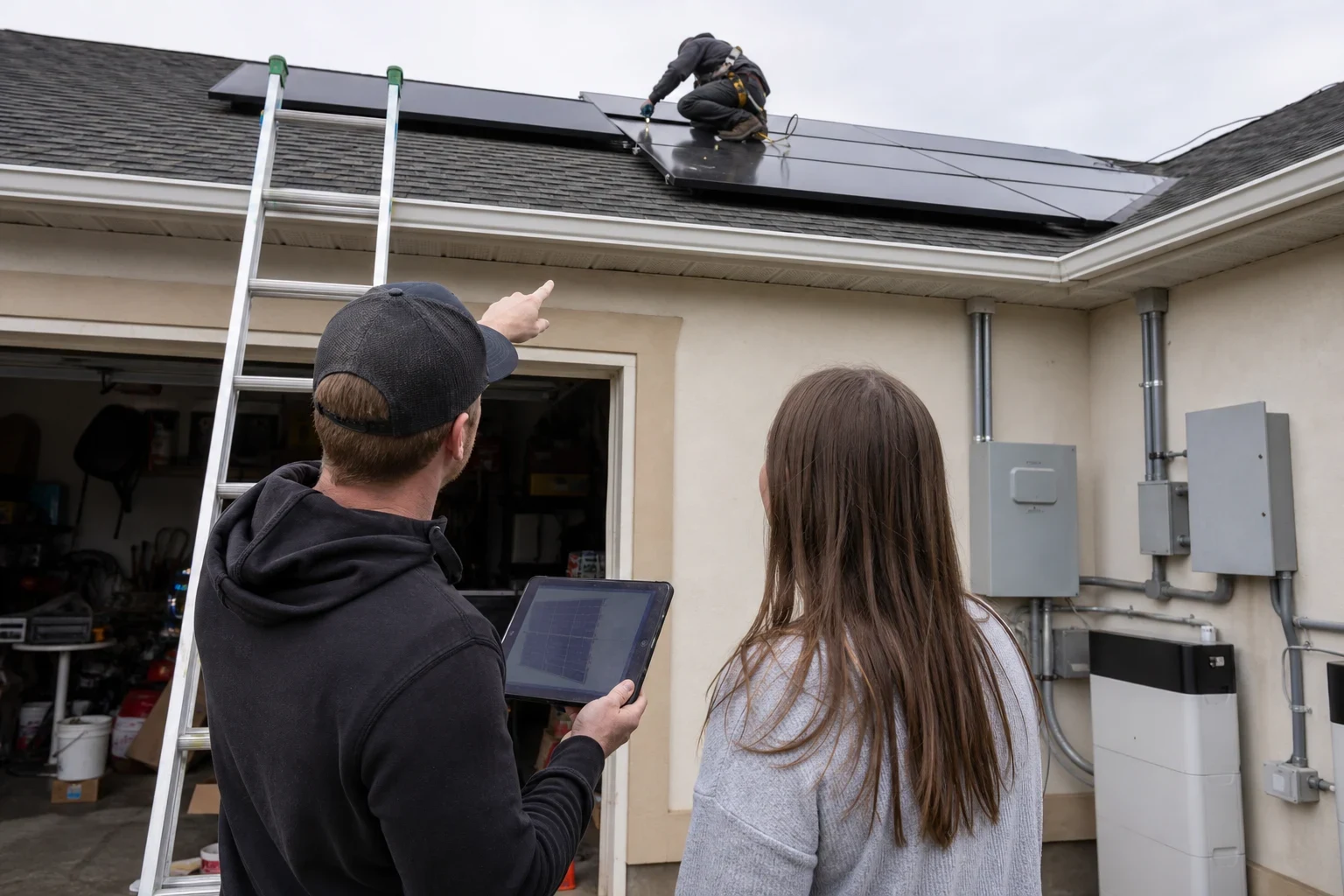
We inspect the roof, measure each plane and present a line-item proposal with the panel layout drawn on your home.
- 3
Protecting your home first
Before work starts, we cover planting beds and walkways below the work area, pad ladder feet and set up harnesses and roof anchors. Driveways get covered where trucks or materials cross.
- 4
Build days with nightly cleanup
Attachments, rails, panels and conduit usually take a few days depending on size. Every evening we pick up wire ends, packaging and fasteners from the roof and yard and run a magnet over the ground below.
- 5
Final sign-off and walk-through
Once the city inspector has passed the work and the utility gives the go-ahead, we switch the array on and set up the monitoring app on your phone. Then we walk the property together to check that the roof, yard and paths are left the way they were.
Questions about solar panel installation
How much roof space does a solar array need?
It depends on the system size, but a typical household array needs one or two roof planes with good sun. During the virtual appointment we estimate the footprint from your usage so you can picture it before the site visit.
Will the panels cause roof leaks?
Every attachment is fastened into the roof framing and flashed and sealed, on shingle or metal roofs alike. We check each penetration before we leave and clean up every evening so your yard stays usable during the job.
How does snow affect panels on the roof?
Snow on the glass usually slides off once the sun hits the panels. The attachments and rails are designed for winter snow loads and the strong canyon winds in this area.
Do I need a permit and utility approval?
Yes. We take care of the building permit and the utility interconnection paperwork for you, book the inspection and follow up until both are approved. You do not need to visit the city office, and we keep you updated by phone along the way.
What does $0 up front mean for me?
It means you can have the system installed without a payment at the start. We go over the full terms in writing so you understand exactly how it works before you agree to anything.
See where solar would sit on your roof
We will look at your property and power bills together by video and show you a sensible array location. No one comes to the house until you are ready.