ServicesSolar Panel Repair
Solar Panel Repair in Farmington
When your panels stop producing what they should, we track down the cause and fix it with care. You get a plain explanation, a written estimate before any work starts, and a property left clean and orderly once the job is done.
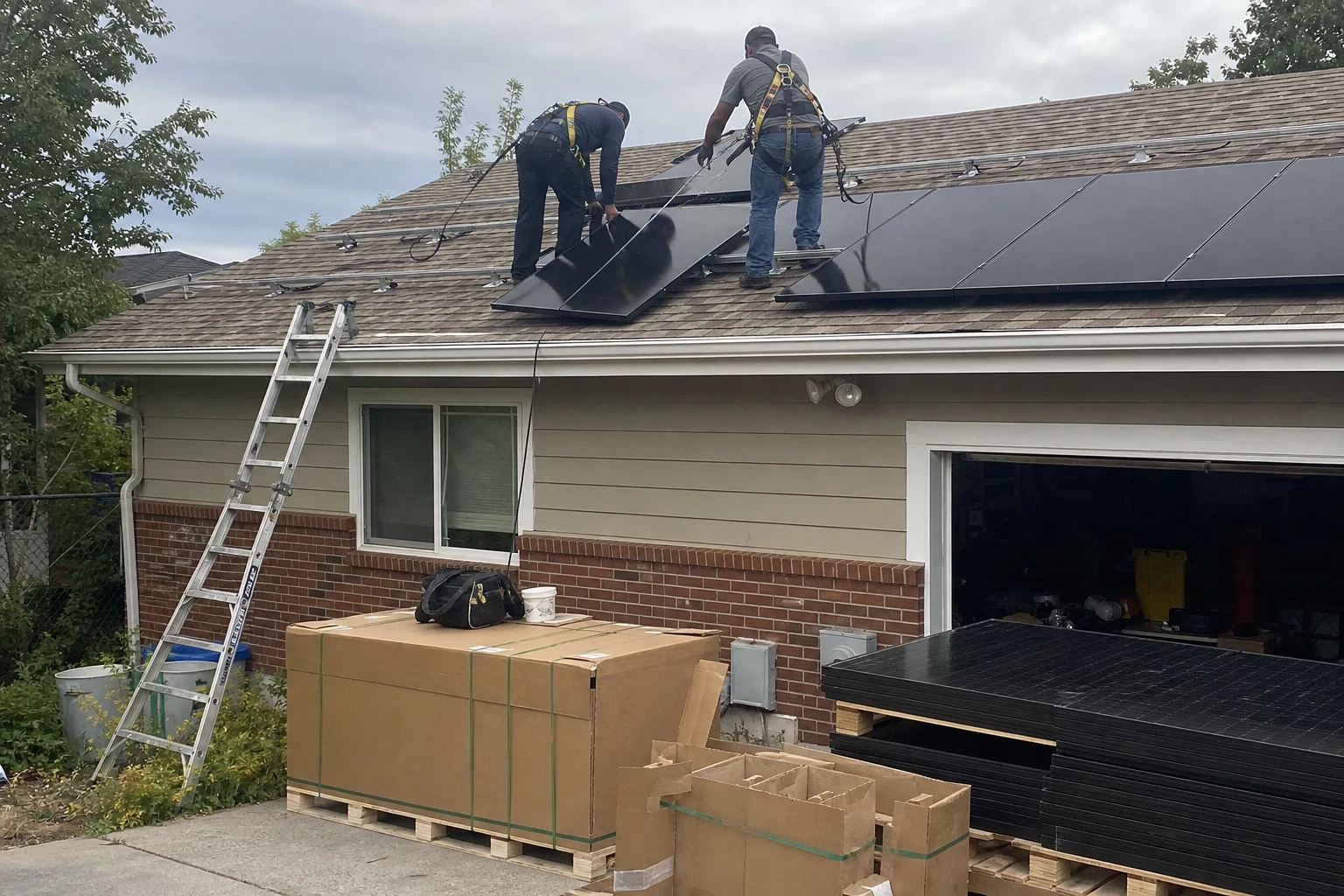
Getting your system back to full output
Solar panels are built to sit outside for decades, but they are not untouchable. Glass can crack, connectors can loosen, wiring can wear through, and a single failed component can pull down the output of an entire string. Most problems show up first as a quiet drop on your monitoring app, long before anything looks wrong from the ground.
Our repair work starts with finding the real cause, not swapping parts until the numbers improve. We show you what we found, tell you whether a repair makes sense, and protect your home and landscaping while we work. When we pack up, the only sign we were there is a system producing again.
What a repair visit covers
- Production and monitoring review
- We compare your current output with what the system should be making for the season. That narrows the search before we ever step outside.
- Panel inspection
- We check each panel for cracked glass, discoloration, delamination and hot spots. Damage that is hard to see by eye often shows up clearly with the right test equipment.
- Wiring and connector checks
- Loose or corroded connectors and chewed or chafed wire runs are common culprits. We test each circuit and replace what is worn, using parts rated for outdoor exposure.
- Inverter and microinverter diagnosis
- If the panels are fine, the fault is often in the equipment that converts their power. We test it, read its error history and explain the options in plain terms.
- Photos and a written estimate
- You see what we see. Every repair is listed line by line before work begins, so there is nothing to guess about.
- Site protection and cleanup
- We lay down protection over lawns and walkways, keep tools and parts contained, and collect every scrap of packaging and old hardware before we leave.
Signs your panels need attention
Output has dropped
A steady decline, or a sudden dip that does not recover on clear days, usually points to a fault rather than weather.
Your monitoring shows errors
Offline alerts, a panel reporting zero, or a blank app all deserve a closer look.
Visible cracks or burn marks
Cracked glass lets moisture in, and brown or scorched spots can signal a hot spot that will keep getting worse.
Damage after a storm
Heavy hail and the weight of a long snow season can stress glass and frames. If output changed after a storm, it is worth checking.
Loose or damaged wiring
Wires hanging free, chewed insulation or a connector that has pulled apart should be repaired before they cause a larger failure.
Why repair prices vary from one home to the next
We cannot price a repair honestly until we know which part has failed, so diagnosis always comes first. Tightening a loose connector and replacing an inverter sit at opposite ends of the scale. Before anything is touched, you get a written list of every item and its cost.
Which part needs work
Reseating a connector or replacing a short length of wire is a small job. A new panel, inverter or microinverter means more in both parts and labor.
The number of damaged panels
A single cracked panel keeps the work contained. When a storm has marked several at once, the job takes more hours and more material.
Finding a compatible replacement
Panels from older or discontinued product lines can be hard to match, and sourcing one that works with your existing system can change the total.
How easy the equipment is to reach
Gear that sits in the open takes little setup. A junction box or panel squeezed behind fixtures or into a tight corner takes longer to reach safely, and the extra time is reflected in labor.
Coverage that may already apply
The original manufacturer may still cover certain parts, and storm damage sometimes falls under a homeowners policy. We explain what might apply to your situation, while the coverage decision stays with your insurer.
How a repair job runs
- 1
Free virtual appointment
We start with a call and a look at your monitoring data and any photos you can share. Often we can narrow down the likely cause before anyone visits.
- 2
On-site diagnosis
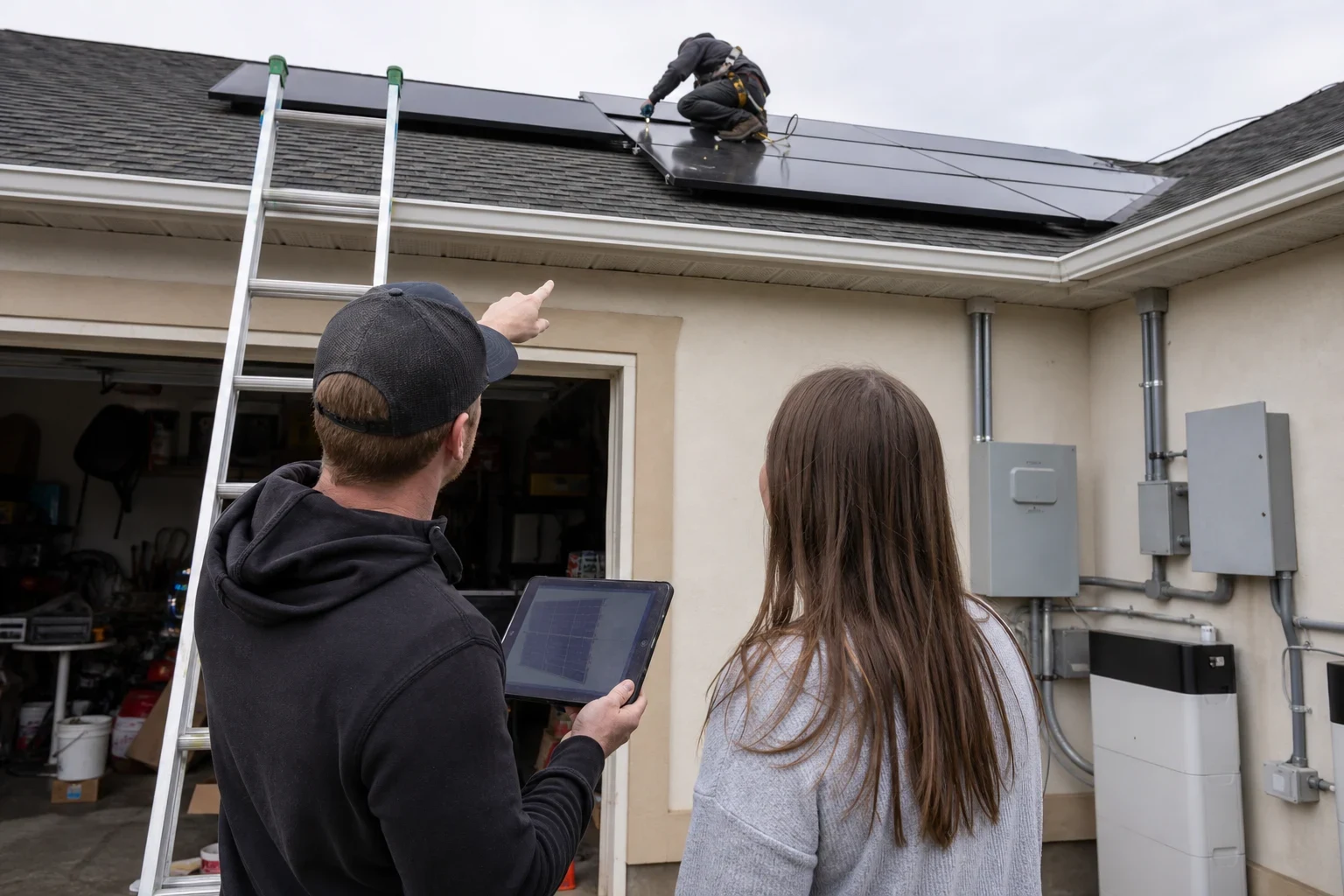
We arrive on the scheduled day, protect the work area and test the system methodically. You get photos and a clear explanation of what is wrong.
- 3
Written estimate
We give you a line-item estimate and an honest view on repairing versus replacing a component. Nothing proceeds until you approve it.
- 4
Repair and testing
We make the repair with matched, outdoor-rated parts, then test each circuit and confirm the system is producing as it should.
- 5
Cleanup and walkthrough
We remove old parts and packaging, sweep the area and walk you through what we did and what to watch on your app.
Solar panel repair questions
How do I know whether I need a repair or just had a cloudy week?
Weather causes short dips that recover when the sun returns. A fault shows as low output on clear days, or one panel or circuit lagging behind the rest. If you are unsure, the free virtual appointment is a good place to start, since we can read your data with you.
Will the repair damage my yard or landscaping?
We work to avoid it. We lay protection over lawns and walkways, keep our equipment in a defined area and clean up fully at the end of the visit. If anything needs to be moved to reach the equipment, we tell you first.
Will I lose power while you work?
The solar system is shut down safely while we repair it, but your home stays connected to the utility. Most homeowners notice nothing indoors beyond the system being offline for the duration of the work.
Should I repair a damaged panel or replace it?
Cracked glass and internal damage usually mean replacing that panel, while wiring and connector faults are typically repaired. We give you a straight answer with photos so you can see the reasoning, and we never push a larger job than the problem calls for.
Does homeowners insurance cover storm damage to panels?
Many policies do, but coverage varies. We can document the damage with photos and a written description for your claim. Your insurer and adjuster make the coverage decision.
Let's find out what is holding your system back
Tell us what you are seeing on your monitoring app or from the yard. We will walk through it together and explain the next step plainly.